
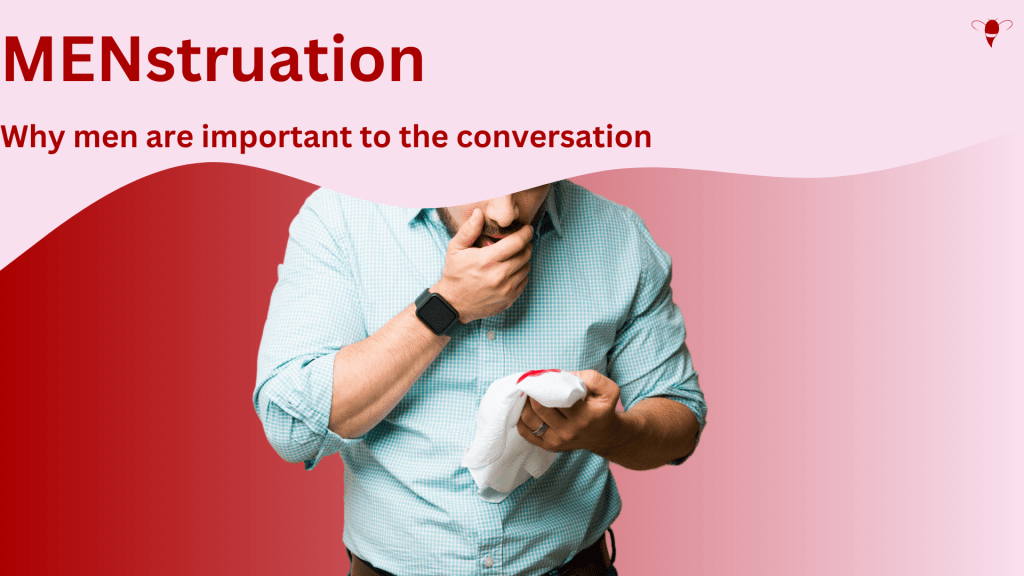
Period stigma is still huge to this day. In some areas more then in others, but every menstruating person on this planet has dealt with period stigma. It is easy to say we should change that and bring periods out of the shadows, but actually doing something is still difficult because of the internalised stigma we all have.
I was raised in a very open household. My mother was very careful to not stigmatise periods and to make open conversations about it possible. However, because of the society I grew up in, I still have to battle with internalised stigma. You don’t talk about it too loud in public, you don’t talk about periods with men and so on. Though to be honest I never got the “don’t talk to men about it”. I’ve been told it is because they find it disgusting, but doesn’t that turn periods into our superpower? If I can scare off any man simply by mentioning my period I would probably run around and tell every man who ever came too close.
But let’s look at what academia has to say about men and menstruation:
Menstruation and Men in Academia
Here’s the thing — menstruation isn’t just a “women’s issue.” It’s a health literacy issue. It’s a gender equality issue. And if we want to build a society where people of all genders feel informed, supported, and empowered, men need to be part of the conversation.
Now think about how menstruation is discussed in public health, schools, and even universities. Most educational programs still treat it as a “female-only” topic — both in who’s being taught and in who’s expected to care.
That silence has consequences. When boys grow up without basic knowledge about menstruation:
- They can become men who don’t know how to support menstruating partners, children, or colleagues.
- They may perpetuate taboos or feel uncomfortable discussing normal bodily functions.
- They miss an opportunity to advocate for better menstrual equity — like access to period products, paid sick leave, or inclusive healthcare.
Here’s where it gets interesting. Academia does talk about menstruation — but it’s often siloed in disciplines like gender studies, public health, or sociology. Rarely is it considered part of standard health education for all students, regardless of gender.
And when men are included? It’s usually as secondary players, if at all. There’s little research on how men’s understanding (or misunderstanding) of menstruation shapes the environments they create — at work, at home, or in policy.
We need a shift — one where menstruation is treated not as a private “women’s problem,” but as a shared public health reality. After all:
- 1.8 billion people menstruate worldwide.
- Most men will have relationships — personal or professional — with people who menstruate.
- Men hold many of the decision-making positions in healthcare, education, and policy.
Wouldn’t it make sense for them to understand a basic biological function that impacts half the population?
If Men Could Menstruate
Almost 50 years ago feminist icon Gloria Steinem asked a question that still echoes loudly today:“What would happen if men could menstruate?”
Spoiler: the world would look very different.
She imagines a parallel universe where menstruation isn’t a source of shame or silence — it’s a source of status. Because in her thought experiment, it’s not women who bleed every month — it’s men.
And in that world?
- Periods would be seen as a sign of strength and virility.
- Tampons would be branded with military names (“The John Wayne Deluxe”).
- There’d be government-funded menstrual leave — probably with bonuses.
- Religious leaders would talk about the holiness of monthly blood.
- And naturally, there would be blood-themed sports metaphors and TV commercials with slogans like “Real men bleed monthly.”
It’s satire, of course — but it cuts to the core of how arbitrary societal values can be when filtered through gender and power. Menstruation isn’t gross or shameful because it’s inherently those things — it’s perceived that way because women do it.
Steinem’s essay is nearly 50 years old, but the truth she highlighted is still painfully relevant. Think about it:
- Period products are still taxed as luxury items in many countries.
- People still whisper “Do you have a tampon?” like it’s a secret mission.
- Menstrual pain is under-researched and under-treated in medicine.
- And yes, boys in school still giggle or grimace during “that chapter” of health class — if it’s even taught.
Now imagine if periods had always been seen as a masculine trait. Would we still be having debates about free period products in schools? Would girls still feel embarrassed asking to go to the bathroom? Probably not.
Conclusion
Boys need to be part of the conversations we have with our girls about menstruation. I once read this quote of “an entire generation was focused on empowering girls, but forgot to educate boys”. For our future girls we need to do better!
Being a woman raised in a man’s world is already difficult enough. I am tired of having to consider how men feel about something completely natural that I have to deal with every month.
What Men Can Do (Starting Today)
If you’re a man reading this — or someone raising or teaching boys — here’s where you can start:
- Get educated: Read up on the menstrual cycle, period products, and common challenges like endometriosis or PMS.
- Talk openly: Normalize the language. Say “period” without whispering. Ask how you can support.
- Advocate: Support policies for free menstrual products in schools and workplaces. Push for inclusive health education.
- Challenge stigma: Call out jokes, taboos, and stereotypes. Silence is what fuels shame.
Bottom line? Menstruation may not happen to all of us, but it affects all of us. And if we want true health literacy — the kind that breaks down barriers and builds understanding — we need everyone in the room. Including the guys.
Sources
Menstruation and Men in Acadmia
Erchull, M.J., 2020. “You will find out when the time is right”: Boys, men, and menstruation. The Palgrave handbook of critical menstruation studies, pp.395-407.
If Men Could Menstruate
Steinem, G., 2020. If men could menstruate. The Palgrave Handbook of Critical Menstruation Studies, pp.353-356.
 RedBee
Leave a comment